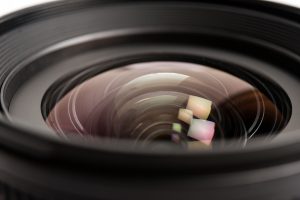
In today’s world of panoramic imaging, intelligent surveillance, and autonomous systems, the lens is more than just a piece of glass, it’s the gateway to data, clarity, and security. Off-the-shelf optics often fall short when projects demand precision. This is where custom lens design delivers its true value: turning complex system requirements into optical solutions that power everything from security platforms and automotive vision to embedded robotics and thermal imaging.
Core Benefits of Custom Lens Design
Custom lens design offers more than just “better optics.” It provides measurable advantages in performance, reliability, and cost-effectiveness for industries where imaging accuracy is critical, such as surveillance, automotive safety, robotics, medical devices, and thermal/UV sensing. Below are the most important benefits, explained with specificity.
Improved Optical Performance
Precision optical design maximizes how the lens and sensor work together, producing sharper images and more reliable data capture.
- Sensor-to-Lens Matching: For example, a CMOS sensor in an autonomous vehicle camera requires pixel-level alignment; mismatched optics result in blurred edges or wasted sensor area. Custom lenses ensure every pixel is utilized effectively.
- Wide Field-of-View & Resolution Optimization: In 360° surveillance cameras, engineers demand wide coverage without fisheye-style distortion. A tailored optical design delivers crisp details across the full field of view.
- Spectral Band Compatibility: Applications like thermal night vision, UV curing, or SWIR food inspection require lenses with specialized glass (germanium, fused silica, or chalcogenide). Custom design ensures high transmission in the correct wavelength band.
Increased Reliability and Durability
Custom optics are engineered for the environments where they will operate, whether inside a factory, on a drone, or mounted on a vehicle bumper.
- Ruggedized Designs: A lens for a roadside license plate recognition system must withstand dust, vibration, and extreme temperature swings without shifting alignment.
- Long-Term Stability: Automotive ADAS lenses are tested for continuous performance despite years of vibration and thermal cycling.
- Reduced System Failure Risk: Unlike catalog lenses, which may degrade or misalign under stress, custom assemblies are built for specific tolerances, reducing downtime in mission-critical systems.
Cost Efficiency Over Time
While the upfront cost of custom design may be higher, the long-term economics are more favorable.
- Lower Total Cost of Ownership: Instead of stacking multiple filters or corrective optics, a single custom lens assembly can meet all requirements, reducing part counts.
- Simplified Integration: For example, a robotics OEM may need a compact M12 mount lens with integrated coatings. Custom optics streamline the assembly, saving engineering time.
- Reduced Maintenance: Rugged lenses in factory automation require fewer replacements and recalibrations, minimizing service interruptions and labor costs.
Enhanced Design Flexibility
Custom optics provide the freedom to meet unique system constraints that catalog parts simply cannot address.
- Tailored Specifications: Engineers can specify focal length, aperture, coatings, and housing geometry. For instance, compact embedded security devices need ultra-wide-angle lenses in low-profile housings.
- Compact Form Factors: Board-level lenses with short working distances enable space-constrained systems such as drones, endoscopes, or handheld inspection devices.
- Support for New Sensors: Emerging lidar and SWIR cameras require optics designed for non-visible wavelengths. Custom designs future-proof devices by supporting evolving sensor technologies.
Expert Engineering Support
Choosing custom design means partnering with optical engineers who understand the trade-offs between performance, manufacturability, and cost.
- Collaborative Development: System integrators and lens designers work together to align optical paths with housing, electronics, and sensor constraints.
- Modeling & Simulation: Ray-tracing software predicts lens behavior across lighting conditions and spectral ranges before prototyping, avoiding costly iterations.
- Application-Specific Expertise: Engineers provide recommendations on AR coatings, IR materials, or vibration-proof housings that meet security, medical, or automotive standards.
Application-Specific Advantages
Custom lens assemblies are not just about optical precision, they are tailored to meet the demands of specific industries and use cases.
Surveillance and Security
Security systems demand wide coverage, high resolution, and reliability under varying environmental conditions.
- 360° Panoramic Coverage: Custom wide-angle lenses provide seamless panoramic imaging with minimal distortion, ideal for public spaces, retail environments, and city surveillance.
- Optimized for ALPR and Night Vision: License plate recognition and low-light monitoring require high-contrast, low-distortion lenses. Tailored optics improve recognition accuracy in challenging lighting conditions.
- Vehicle & Infrastructure Inspection: High-resolution custom optics enable anomaly detection in undercarriage scanners, airport vehicle checkpoints, and shipping container inspection systems.
Automotive and Robotics
In both transportation and automation, precision imaging drives safety and efficiency.
- Advanced Driver-Assistance Systems (ADAS): Custom lenses maintain resolution and focus in varying lighting, vibration, and temperature conditions, critical for collision avoidance, lane departure, and blind-spot monitoring.
- Robotic Assembly & Laser Guidance: Robots require precision optics for visual guidance in welding, sealing, and inspection. Custom lenses ensure depth accuracy and alignment in fast-moving environments.
- Drones & Mobile Platforms: Compact, vibration-resistant lenses are designed for UAV navigation, in-cabin monitoring, and delivery robots where size and stability are essential.
Infrared, Ultraviolet, and Embedded Vision
Beyond visible light, many industries rely on spectral imaging for specialized tasks.
- Infrared Lenses for Thermal Imaging: Used in firefighting cameras, perimeter surveillance, and ADAS night vision systems. Built from materials like germanium or chalcogenide glass for LWIR and MWIR transmission.
- Ultraviolet Lenses: Optimized for UV sterilization systems, semiconductor inspection, and pathogen detection where fused silica or UV-grade quartz ensures high transmission.
- Embedded Vision Systems: Compact board-level lenses are used in medical devices, factory automation sensors, and smart home technologies where space and integration are critical.
Machine Vision and Industrial Applications
Industrial imaging requires lenses that deliver clarity, speed, and consistency.
- High-Speed Inspection: Custom lenses maintain edge-to-edge resolution for conveyor systems inspecting parts, textiles, or electronics at scale.
- Line-Scan and SWIR Imaging: Specialized optics enable defect detection in wide materials like tires, fabrics, or food products, where uniformity across the field is critical.
- Defect Detection & Quality Assurance: Precision lenses ensure industrial cameras can spot micro-defects, misalignments, or inconsistencies in high-volume manufacturing.
Why Optical Design Matters
The lens is the first and most important element in any imaging system. While sensors, processors, and software are critical, they can only work with the data the optics provide. Poor lens selection can undermine even the most advanced systems.
Limitations of Off-the-Shelf Lenses
Generic, catalog-based lenses are designed to be broadly compatible, but not optimized for unique system requirements.
- Performance Gaps: Standard lenses may fail to deliver the necessary resolution, field of view, or spectral transmission for demanding applications.
- Integration Issues: Mechanical dimensions, mounting styles, and sensor mismatches often force engineers to compromise or re-engineer system components.
- Use Case Misalignment: Surveillance cameras, autonomous vehicles, or industrial line-scan systems often require configurations that cannot be achieved with catalog optics.
How Custom Optics Solve Real-World Challenges
Custom optical design allows engineers to address specific conditions and challenges that off-the-shelf products cannot overcome.
- Low-Light Performance: Tailored apertures, coatings, and glass materials enhance image capture in night vision, thermal imaging, and medical diagnostics.
- Vibration and Environmental Stress: Ruggedized optics resist vibration and shock, ensuring stability in automotive, aerospace, and factory settings.
- Wide Field-of-View Without Distortion: Panoramic surveillance systems and robotic vision demand wide coverage while preserving clarity, achievable only with custom lens design.
- Spectral Adaptation: By selecting IR- or UV-optimized materials, lenses can function in specialized bands where standard glass is ineffective.
Competitive Advantage Through Better Imaging
In industries where image quality directly impacts safety, performance, or customer trust, superior optics become a differentiator.
- Sharper Images Mean Better Decisions: In surveillance, clearer images translate to faster and more accurate anomaly detection.
- System Efficiency: Custom optics reduce the need for corrective components, streamlining system design and lowering overall costs.
- Market Differentiation: Products equipped with optimized lenses outperform competitors, giving manufacturers an edge in automotive ADAS, robotics, medical imaging, and industrial inspection markets.
Custom lens design delivers sharper imaging, greater reliability, and solutions tailored to real-world challenges that off-the-shelf optics cannot meet. From surveillance to automotive and industrial systems, custom optics ensure the performance and precision needed to power today’s most advanced technologies.
Partner with Universe Optics to design the custom lenses that power your system’s success. Speak with our optical engineers today.