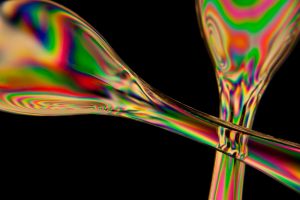
Polarization is one of the most fundamental yet often overlooked properties of light, playing a critical role in everything from advanced optical systems to everyday technologies. But what is polarization? While most people focus on light’s intensity and wavelength, polarization determines how light waves vibrate and interact with surfaces, lenses, and filters. Understanding what polarization is, and why it matters, provides valuable insight into both scientific applications and practical uses that shape how we see and capture the world.
Understanding Polarization
Polarization refers to the orientation of the electric field in a light wave. Since light is an electromagnetic wave, it consists of electric and magnetic fields oscillating perpendicular to one another and to the direction in which the wave is traveling. By studying how these oscillations behave, scientists and engineers can understand how light interacts with different materials and design systems to control or manipulate it.
Light as an Electromagnetic Wave
Light travels in waves composed of two fields:
- The electric field, which oscillates in a certain direction.
- The magnetic field, which oscillates perpendicular to the electric field.

Together, these oscillations move forward, transporting energy. The orientation of the electric field oscillation is what defines the polarization of light.
Unpolarized Light
Unpolarized light has no single preferred direction of electric field oscillation. Instead, the electric field vibrates randomly in all directions perpendicular to the path of travel.
Examples of unpolarized light sources
- Sunlight
- Halogen lamps
- Incandescent bulbs
These sources emit waves from countless atoms at once, resulting in mixed, random orientations of the electric field.
Polarized Light
Polarized light, unlike unpolarized light, has a clearly defined orientation of its electric field. This means the oscillations are ordered and can be described by a specific pattern. Polarized light can be naturally occurring (e.g., light scattered by the atmosphere) or artificially generated using devices such as polarizers and lasers.
Types of Polarized Light
Linear Polarization
In linear polarization, the electric field oscillates in a single, fixed direction as the wave travels.
- Common in lasers.
- Useful in optical instruments where controlled light direction improves accuracy.
- Widely used in photography for glare reduction.
Circular Polarization
Here, the electric field rotates in a circular motion while maintaining a constant amplitude. Imagine the electric field tracing a helix as the light moves forward.
- Found in some advanced optical communication systems.
- Used in 3D movie glasses to separate left and right images.
Elliptical Polarization
This is a more general form where the electric field traces out an ellipse over time.
- Occurs when linear and circular polarizations combine.
- Common in complex optical setups.
- Plays a role in advanced imaging and signal processing.
Why This Matters
Understanding the difference between unpolarized and polarized light is critical for:
- Optical Design: Improving accuracy of instruments, microscopes, and filters.
- Photography: Reducing glare and enhancing contrast with polarizing filters.
- Daily Use: Providing clearer vision through polarized sunglasses or sharper displays in LCD screens.
How Polarization Is Controlled and Used
Polarization is not just a natural property of light, it can also be manipulated and controlled to serve specific purposes in science, engineering, and photography. The most common tools for this purpose are polarizers, which selectively filter light based on its polarization direction.
Polarizers as Tools to Manipulate Polarization
A polarizer is an optical filter that allows only light waves of a specific polarization to pass through while blocking or absorbing others. This process ensures that the transmitted light has a controlled and predictable polarization state. Polarizers are widely used in optical systems, cameras, microscopes, and displays to improve clarity and reduce unwanted light effects.
Types of Polarizers
Dichroic Polarizers
Absorb one polarization direction while transmitting the perpendicular one.
- Scientific instrumentation for precise measurements.
- Microscopy for improving contrast in biological samples.
- Photography to reduce atmospheric haze and reflections.
Key Benefit: Provides high absorption efficiency, making them ideal for accuracy-driven applications.
Reflective Polarizers
Transmit the desired polarization while reflecting the unwanted polarization.
- Used in LCD displays to enhance brightness and energy efficiency.
- Optical systems where light recycling is necessary.
Key Benefit: Instead of wasting energy by absorption, reflective polarizers recycle light, making them more energy-efficient.
The Practical Role of Linear Polarizers
Among all types, linear polarizers are the most widely used, especially in everyday scenarios:
- Glare Reduction: Polarizers block horizontally polarized light, which is responsible for glare from surfaces like water, glass, and roads.
- Hot Spot Elimination: When photographing reflective objects, linear polarizers reduce uneven bright spots caused by intense reflections.
- Improved Image Clarity: By filtering out scattered light, polarizers improve contrast and make details more visible in photography and videography.
Examples of use
- Photographers use linear polarizers to capture fish below the water’s surface without reflection interference.
- Drivers and outdoor enthusiasts use polarized sunglasses to see clearly through glare.
- Engineers apply them in inspection systems to detect surface defects invisible under unpolarized light.
Why Controlling Polarization Matters
Controlling polarization is critical because it:
- Enhances visual clarity and accuracy in optical instruments.
- Increases energy efficiency in display technologies.
- Improves safety and comfort in everyday life by reducing glare.
- Enables high-precision results in scientific analysis and industrial inspection.
Applications in Science and Technology
Polarization plays a decisive role across multiple industries and scientific fields. By controlling how the electric field of light oscillates, researchers and engineers can tailor light to achieve higher accuracy, reduce interference, and unlock new imaging and display technologies.
Optical Systems and Lasers
In laser physics and optical engineering, polarization control is essential:
- Beam Quality: A polarized laser beam maintains spatial coherence better than unpolarized light, allowing for sharper cutting, welding, and engraving in industrial lasers.
- Filter Design: The transmission spectrum of optical filters depends on the input polarization. For instance, thin-film filters exhibit different cut-off wavelengths when exposed to s-polarized (perpendicular) vs. p-polarized (parallel) light.
- Reflection Control: Anti-reflective coatings are polarization-sensitive, especially at oblique angles, where p-polarized light may transmit more efficiently while s-polarized light reflects.
Example: In fiber-optic communication, polarization-maintaining fibers are used to prevent signal degradation caused by random polarization changes during transmission.
Metrology and Material Analysis
Polarization is a powerful diagnostic tool in materials science:
- Photoelasticity: When transparent materials such as plastics or glass are stressed, they become birefringent (splitting light into two polarized rays). By analyzing interference patterns under polarized light, engineers can map stress distributions in automotive parts, aircraft components, or safety glass.
- Thin Film Characterization: Ellipsometry, a technique based on polarized light reflection, measures the thickness and refractive index of nanometer-scale films used in semiconductors and solar panels.
Example: Stress birefringence testing of car windshields ensures that they will not fracture under uneven pressure or temperature changes.
Biological and Pharmaceutical Applications
Polarization-based microscopy and spectroscopy are indispensable in life sciences:
- Polarized Light Microscopy (PLM): Highlights birefringent biological structures such as collagen fibers, starch granules, and muscle tissue, providing details invisible under conventional microscopes.
- Pharmaceutical Analysis: Polarimetry measures the optical rotation of chiral drug molecules, a key step in ensuring that the correct enantiomer (biologically active form) is present in medicines.
Example: In drug manufacturing, polarized light testing ensures that the active ingredient has not degraded into a less effective or harmful form.
Display Technology and Consumer Devices
Polarization is embedded in the electronics we use daily:
- LCD Screens: Every liquid-crystal display uses a pair of perpendicular linear polarizers. By twisting the orientation of liquid crystal molecules, the screen controls whether light passes through or is blocked, forming pixels.
- 3D Movie Glasses: Use left- and right-circular polarizers to deliver separate images to each eye, producing a stereoscopic effect.
- Polarized Sunglasses: Selectively block horizontally polarized glare reflected off water, snow, or roads, dramatically improving visibility for drivers, pilots, and outdoor enthusiasts.
Example: Without polarized filters, LCD screens would not function, these filters are as critical as the liquid crystals themselves.
Polarizing Filters vs UV Filters in Photography
| Feature / Effect | UV Filters | Polarizing Filters |
| Function | Blocks UV rays before they reach the sensor. | Filters out polarized light and ambient reflections. |
| Image Quality | Reduces haze and blue fringe at high altitudes. | Cuts glare from water, glass, and shiny surfaces. |
| Color Impact | Keeps colors natural by removing UV distortion. | Boosts contrast and deepens sky and landscape colors. |
| Lens Protection | Shields lens from scratches, dust, and cracks. | Limited protection; designed mainly for glare control. |
| Detail Visibility | Clears haze but does not reveal hidden details. | Shows objects behind reflections (fish underwater, items in glass). |
| Limitations | No effect on glare or reflections. | Doesn’t remove glare from metallic surfaces. |
| Best Use | Everyday shooting, bright sunlight, high elevations. | Outdoor, landscape, water, and glass photography. |
Polarization defines how light behaves, and mastering it allows us to sharpen images, control reflections, and improve scientific accuracy. From lasers and microscopes to sunglasses and camera filters, it is the unseen principle that makes modern optics clearer, safer, and more effective.
Partner with Universe Optics for precision lenses and optical solutions that bring clarity to every application.